Why Our Most Treasured Photographs Deserve More Than A Frame
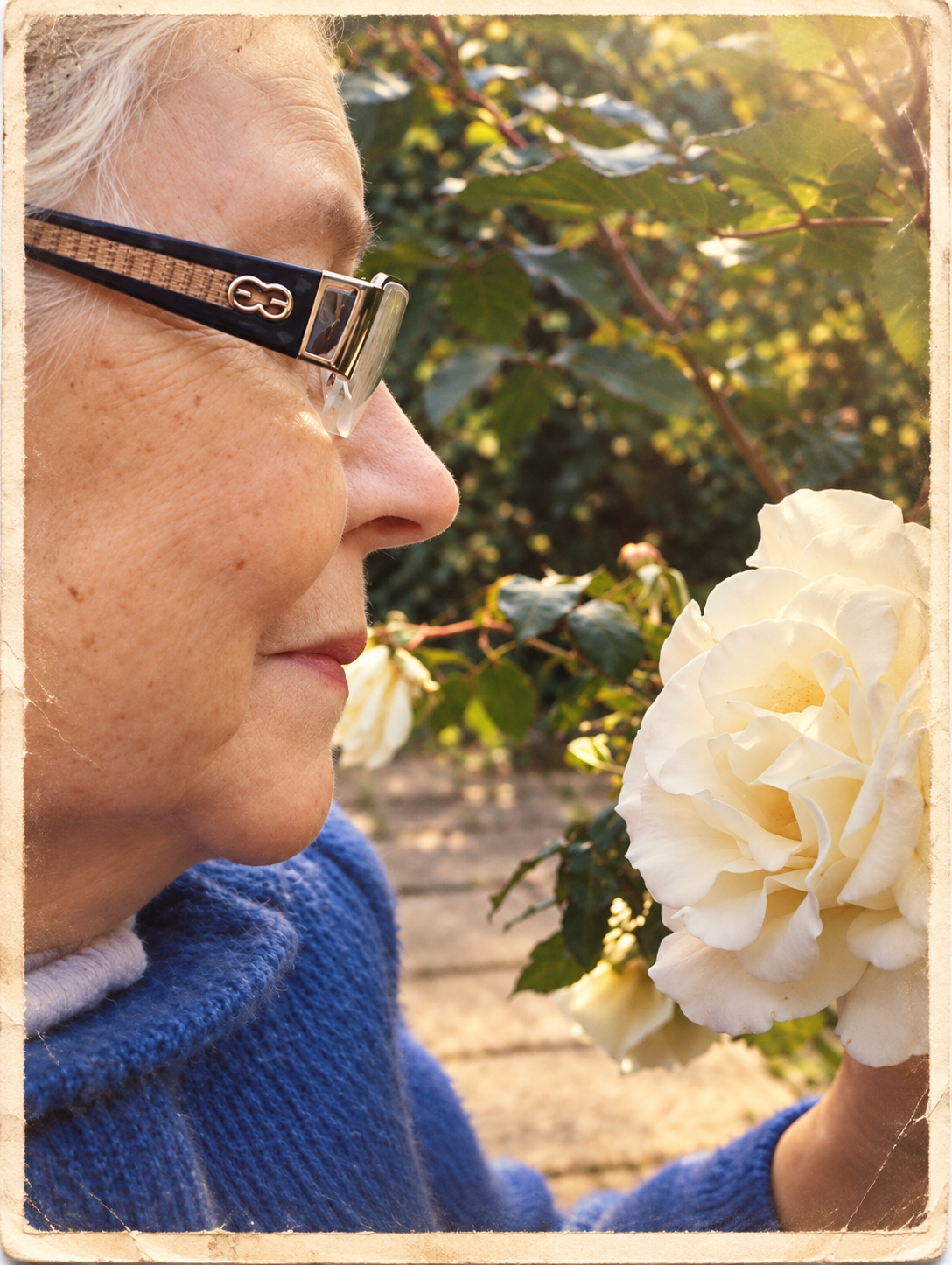
There are photographs we look at, and photographs we return to.
They sit in frames, albums, drawers and increasingly on phones; some carefully preserved, others almost forgotten until chance brings them before us again. Yet the photographs that matter most to us are rarely important simply because of what they show. Their true value lies in everything beyond the edge of the picture: the people, places, voices, relationships and moments they cause us to remember.
A photograph may capture a fraction of a second. A memory contains an entire world.
Perhaps that is why certain photographs acquire such extraordinary power as the years pass. A picture that once seemed ordinary can become precious. A familiar face, a particular expression, a garden gate, a dog asleep in its favourite chair — small details become portals through which whole chapters of our lives return.
But photographs have a limitation. They can show us what was there, but they cannot always tell us why it mattered. That reveal belongs to the story.
Long before photography existed, we preserved the people and events that mattered to us through words. Stories were spoken, remembered, retold and eventually written down. They carried lives from one generation to another.
Photography gave us something miraculous: the ability to arrest time.
Suddenly a face could remain young. A wedding day could remain forever in the afternoon on which it happened. A child could remain caught halfway through a laugh. Someone long gone could still look directly into our eyes.
And yet the photograph itself remains silent.
It cannot tell the person looking at it fifty years later what happened five minutes before the shutter clicked. It cannot explain the private joke behind the smile, why that particular holiday mattered, what the dog was called, what was playing on the radio, or why everyone in the picture remembers that apparently insignificant afternoon with such affection.
Those things survive only if somebody tells the story.
And perhaps this matters more now than ever.
We take more photographs than any generation before us. Thousands of moments can accumulate on a phone almost without our noticing. We photograph birthdays, holidays, dinners, pets, friends, children, landscapes and one another — creating an enormous visual record of our lives.
Yet abundance can make individual photographs strangely disposable. We scroll past yesterday in order to photograph today.
Among those thousands of images, however, there will always be a handful that are different.
We know them when we see them. They are the photographs we would save. The ones we send to somebody with the words, Remember this? The ones that make us laugh unexpectedly, or stop for a moment, or feel the peculiar mixture of happiness and sadness that comes from seeing something which cannot happen quite that way again.
These are not simply photographs.
They are fragments of a life.
And that thought lies at the heart of the Lyrical Pictogram.
The idea is wonderfully simple: choose a picture, get a story.
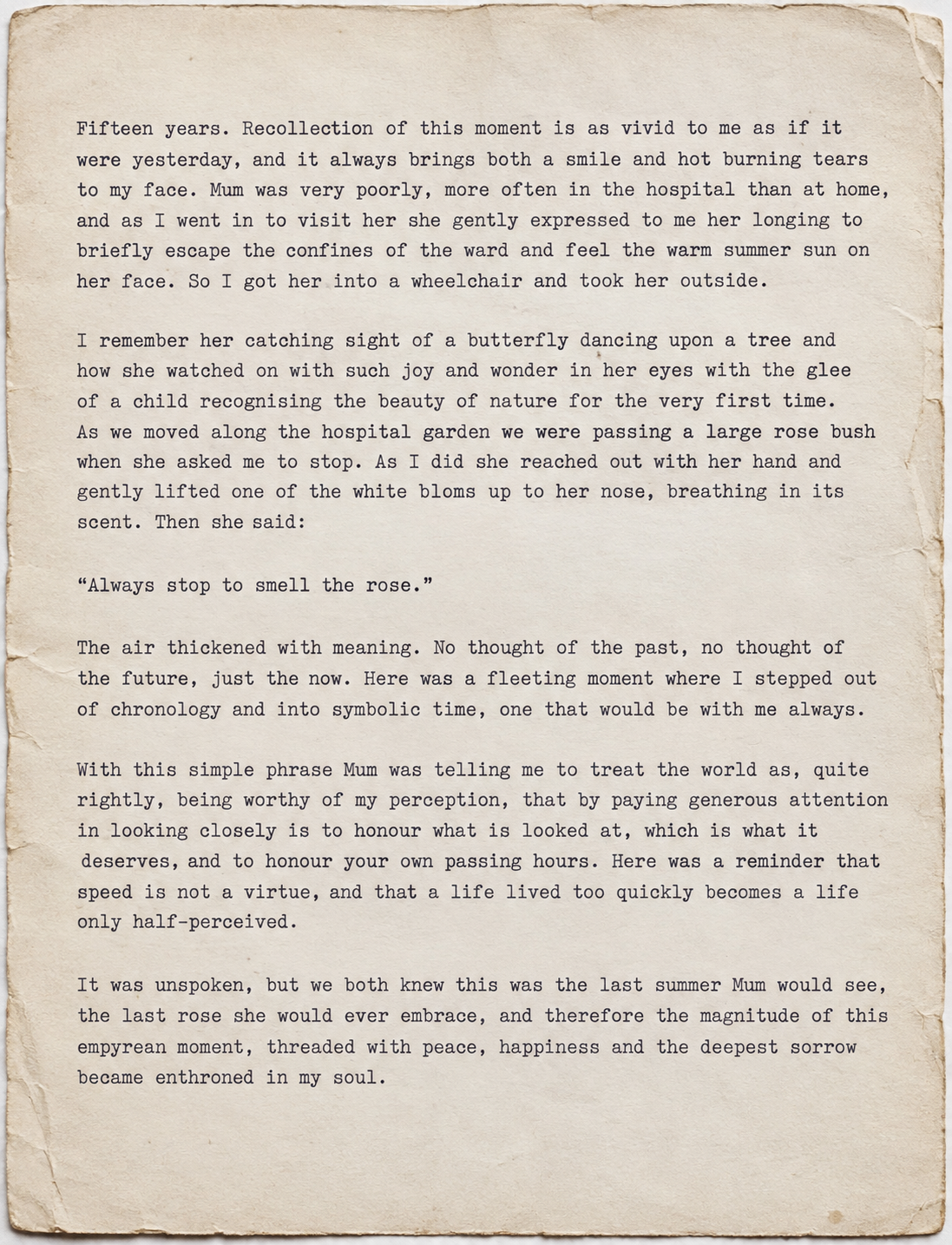
A treasured photograph becomes the starting point for an original piece of literature; not merely a description of what can be seen, but a portrait in prose inspired by the people, relationships, memories and moments surrounding it.
Because sometimes a picture deserves words.
The photograph preserves the instant. The story can wander beyond it: backwards into memory, sideways into imagination and forwards towards the person who may one day inherit both.
Presented together, image and prose become something rather different from either alone - a piece of personal literary art created from a moment that already belongs to you.
There is also something pleasingly contrary about giving those words physical form.
In an age of screens, clouds, feeds and files, a Lyrical Pictogram returns the story to paper. It is printed on handmade cotton paper, given a wax seal and presented as an object intended to be kept.
Not consumed and forgotten.
Kept.
Because the most meaningful things we possess are rarely meaningful because of what they cost. Their value comes from association. A letter in familiar handwriting. An old photograph with curled edges. A book bearing an inscription. A tiny object which would mean absolutely nothing to a stranger and almost everything to us.
They become part of the archaeology of a life.
Perhaps that is what our favourite photographs really are too.
Evidence that somebody was here.
That somebody loved.
That somebody laughed.
That somewhere, on one otherwise ordinary day, something happened that became worth remembering.
A frame can preserve the photograph.
A story can preserve what it meant.